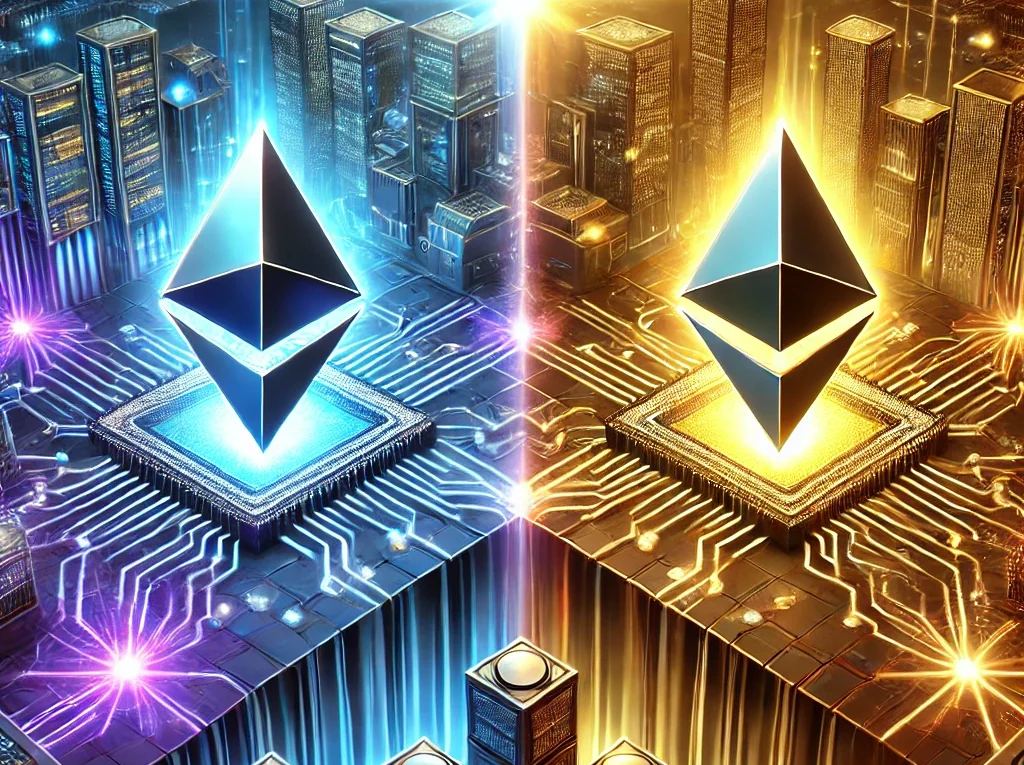
Is Solana the Ethereum Killer? A 2025 Performance Comparison
Solana has been labeled an “Ethereum killer” since its early days, but as we approach 2025, does this claim still hold? Ethereum remains the dominant smart contract platform, while Solana has made significant strides in scalability and efficiency. This article provides an in-depth comparison of Solana and Ethereum in 2025, examining factors like speed, security, decentralization, and ecosystem growth.
Scalability and Performance
One of Solana’s strongest advantages over Ethereum has always been its high-speed transactions and low fees. In 2025, Solana maintains an average of 65,000 transactions per second (TPS), compared to Ethereum’s 100,000+ TPS with rollups after the full implementation of Ethereum 2.0. However, Ethereum still struggles with congestion when demand spikes, whereas Solana’s architecture remains optimized for fast execution with minimal delays.
Transaction Fees
Ethereum’s transition to Proof-of-Stake (PoS) and Layer 2 scaling solutions like Optimistic Rollups and ZK-Rollups has significantly reduced gas fees, making transactions more affordable. However, Solana’s fees continue to be far lower, with an average transaction cost of $0.00025, compared to Ethereum’s $0.10-$1 depending on network activity.
Decentralization and Security
Ethereum’s security is largely considered superior due to its highly decentralized nature. With over 800,000 validators in 2025, Ethereum benefits from a robust and secure Proof-of-Stake consensus. In contrast, Solana has a lower validator count, around 4,000, making it more centralized in comparison. While Solana has taken steps to improve decentralization, it still faces criticism for validator hardware requirements that limit accessibility.
Security is another key consideration. Ethereum’s well-audited smart contracts and battle-tested ecosystem make it the safer choice for developers and institutions. Solana, despite improvements, has suffered multiple network outages in the past, raising concerns about reliability.
Ecosystem and Adoption
Ethereum’s ecosystem continues to dominate in DeFi, NFTs, and institutional adoption. Major players like Aave, Uniswap, and OpenSea remain Ethereum-first, with only partial adoption of Solana. However, Solana has built a strong gaming and NFT presence, with platforms like Magic Eden and Star Atlas leading the way. The low fees and fast transactions make Solana an attractive option for new Web3 projects, even as Ethereum solidifies its role as the go-to network for institutional DeFi.
Developer Activity
Ethereum boasts the largest developer community, contributing to continuous upgrades and improvements. Solana has grown its developer ecosystem substantially, but it still lags behind Ethereum in terms of sheer numbers and long-term support. However, Solana’s developer tools and Rust-based programming have made it easier for new projects to onboard quickly.
Conclusion: Is Solana the Ethereum Killer?
While Solana has successfully positioned itself as a high-performance blockchain with clear advantages in speed and cost, Ethereum’s continued evolution has kept it at the top. Ethereum’s security, decentralization, and widespread adoption make it unlikely to be dethroned anytime soon. Instead of being an outright “Ethereum killer,” Solana serves as a strong alternative for specific use cases, particularly those that demand high throughput and low fees.
As of 2025, Solana remains a formidable competitor, but Ethereum’s ecosystem and security ensure its continued dominance. Rather than one replacing the other, both networks will likely coexist, catering to different segments of the blockchain industry.