Tokenized Real-World Assets: What Investors Need to Know in 2026
Tokenized real-world assets, commonly called RWAs, connect blockchain records to assets or financial claims that exist beyond a crypto network. The category can include tokenized gold, government-debt products, private credit, funds, stocks, and other securities. Programmable settlement and compatibility with digital wallets can make these exposures easier to transfer and integrate into onchain applications.
Yet tokenization does not make the underlying instrument simpler. Investors still need to understand ownership rights, custody, valuation, redemption, regulation, and liquidity. In 2026, the useful question is not whether something is “onchain,” but what the digital unit legally and economically represents.
One label covers several structures
An issuer can place its own security on a blockchain, or a third party can issue a digital claim linked to property held elsewhere. Those models may look similar in a wallet while giving holders very different rights.
PAX Gold offers a concrete asset-backed example. Paxos states that each PAXG token represents one fine troy ounce of London Good Delivery gold held in accredited London vaults. The issuer publishes reserve information and provides redemption routes subject to its terms. This structure is therefore more than a price reference: it is designed around a defined claim on allocated gold.
Tokenized securities can be structured differently. A digital unit might represent the issuer’s own share, a custodial entitlement, or a contractual instrument tracking another security. US securities regulators emphasized in 2026 that these categories vary according to who issued it and what rights holders receive. The blockchain record does not, by itself, answer the ownership question.
Why RWAs are attracting attention
RWAs bring established investments into programmable financial infrastructure. Transfers may settle through blockchain rails, smart contracts can automate some operational steps, and digital holdings can interact with compatible trading, lending, or collateral systems. Current crypto narrative data also treats RWA-related projects and terms as a visible market theme.
For issuers, tokenization can expand distribution and simplify some recordkeeping or settlement processes. For investors, it may provide smaller investment units. These benefits depend on the product design, legal framework, and available liquidity; they are not guaranteed by the token format.
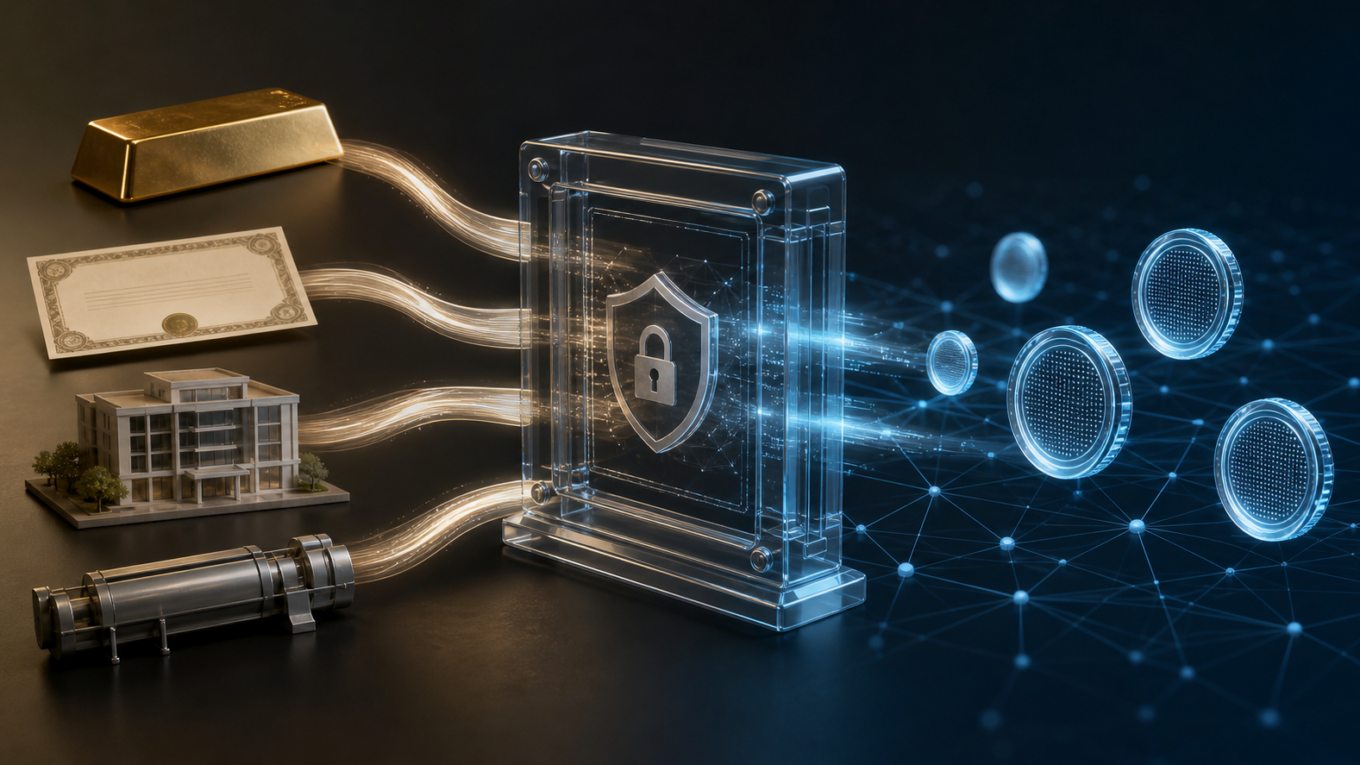
The real innovation is the combination of an offchain holding and an onchain transaction layer. That combination also creates a dependency chain: issuer, custodian, administrator, verification provider, blockchain, smart contract, oracle, and trading venue may all affect the investment.
The risks sit in several layers
Start with the underlying exposure. Digital gold still follows gold prices. Onchain debt still carries interest-rate and credit risk. Blockchain-based stocks still reflect company and market performance. A digital wrapper does not remove those forces.
Then examine the claim. Does the holder own the property, hold a beneficial interest, or merely have a contractual right against an issuer? What happens if the issuer or custodian enters bankruptcy? Clear redemption terms, asset segregation, independent verification, and enforceable holder rights are more important than polished blockchain branding.
Operational risks matter too. Smart contracts can contain bugs, private keys can be compromised, and bridges or oracles can fail. Transfer restrictions, identity checks, jurisdictional rules, and wallet eligibility may limit how freely a token can move. Secondary-market liquidity may also disappear when it is needed most.
Yield is not automatic
Some RWA instruments distribute income generated by Treasury bills, private loans, or other cash-flow-producing assets. Others track a market and pay no yield. A platform can also offer a separate earn product for a non-yielding holding.
Investors should separate these cases. Ask whether income comes from the underlying investment, from a lending strategy, or from a promotional subsidy. Review fees, payout timing, valuation method, and whether returns accumulate in the quoted price or arrive as additional units. Higher displayed yield may reflect greater credit, liquidity, duration, or platform risk.
A due-diligence framework for investors
Before buying any tokenized RWA, answer six questions:
- What is the underlying asset? Identify it precisely and understand its ordinary market risks.
- What does the token represent? Read the legal terms, not only the product summary.
- Who holds and verifies the asset? Check custody, asset segregation, audits, attestations, and reporting frequency.
- How does redemption work? Review minimums, fees, timing, eligible jurisdictions, and suspension clauses.
- Where does liquidity come from? Compare onchain markets with issuer minting and redemption channels.
- Which technical systems are critical? Consider the blockchain, contracts, oracles, bridges, and key management.
Key takeaways
- Tokenization changes how an asset is recorded and transferred, not its underlying economic nature.
- Similar-looking RWA tokens can grant very different legal and redemption rights.
- Custody, verification, liquidity, and jurisdiction deserve the same attention as smart-contract design.
- Yield must be traced to its actual source and assessed with the risks that produce it.
- Product documents and current terms should guide due diligence before any transaction.
RWAs may make parts of traditional finance more programmable, but careful analysis still begins offchain: with the asset, the contract, and the institutions standing behind the token. This article is informational and not financial or legal advice.